For hotels, resorts and cafés, outdoor furniture is a revenue asset. Sun loungers, dining sets and sofas shape guest photos, reviews and repeat bookings — but commercial use wears furniture far faster than a home patio. A simple maintenance routine is the cheapest insurance against faded frames, stained cushions and early replacements. This guide gives hospitality buyers a practical maintenance plan for outdoor furniture, broken down by material and task.
Why Maintenance Matters More for Commercial Buyers
A hotel terrace sees hundreds of uses per day in peak season. Salt air, chlorine splash, sunscreen, food spills and UV all attack finishes and fabrics at once. Without maintenance, even quality commercial-grade furniture starts to look tired within one or two seasons — and guests notice.
The business case is straightforward:
- Extend replacement cycles. Furniture that should last many years often gets replaced early purely from neglect.
- Protect the guest experience. Clean, well-kept outdoor furniture shows up in reviews and photos; worn-out pieces do too.
- Lower lifetime cost per seat. An hour of monthly upkeep costs far less than reordering a full terrace set a year early.
Build a Cleaning Schedule Your Staff Can Actually Follow
The best maintenance plan is the one your team will keep. Divide tasks by frequency so nothing gets forgotten during the busy season.
Daily and Weekly: Quick Touch-Ups
- Shake out cushions and brush loose debris off sofas, dining chairs and loungers.
- Wipe table tops with a damp cloth at the end of service — food and drink residue hardens fast in the sun.
- Check that umbrella bases, lounger wheels and chair feet are stable and correctly positioned.
- During pool season, rinse chlorine splash off frames with fresh water at least once a week.
Monthly: Deeper Cleaning
Once a month, give frames, tabletops and cushion covers a proper wash with mild soap and water, rinse thoroughly and let everything dry in the sun. Inspect weave, welds and joints for looseness, and tighten any bolts or screws on dining sets and swings.
Seasonal: Overhaul and Storage
At the end of the peak season — or before it begins — schedule a full review:
- Clean and fully dry every piece, including underneath seats and inside weave gaps.
- Touch up any chips in powder coating to stop corrosion before it spreads.
- Store or cover pieces not in use; even weatherproof furniture lasts longer out of constant exposure.
- Review the inventory and plan replacements for the next order cycle — browse our outdoor sofa collection to see current designs ahead of the new season.
Caring for Different Frame Materials
Different materials fail in different ways. Match the care to the material.
Solid Teak Frames
Teak is prized for its natural oils and resistance to rot, but it still weathers. Untreated teak gradually turns silver-gray — a cosmetic change many buyers like, but one that should be uniform across a set so the pieces match.
- Wash teak with soapy water and a soft brush; avoid pressure washers, which gouge the grain.
- To keep the warm honey tone, apply teak oil or a teak-specific sealer once or twice a year. Test on one piece first to check the color result.
- Keep teak pieces off constantly damp surfaces; air circulation underneath prevents mold in humid climates.
Powder-Coated Aluminum Frames
Aluminum frames don’t rust, but the powder coating can chip from impact — and a chip is where corrosion starts, especially near the sea.
- Clean with mild detergent; avoid abrasive pads and harsh solvents that dull the coating.
- Touch up chips promptly with matching paint to seal the metal underneath.
- In coastal locations, increase rinse frequency — salt deposits are the main enemy of coated metal furniture.
Rope and Rattan Weaves
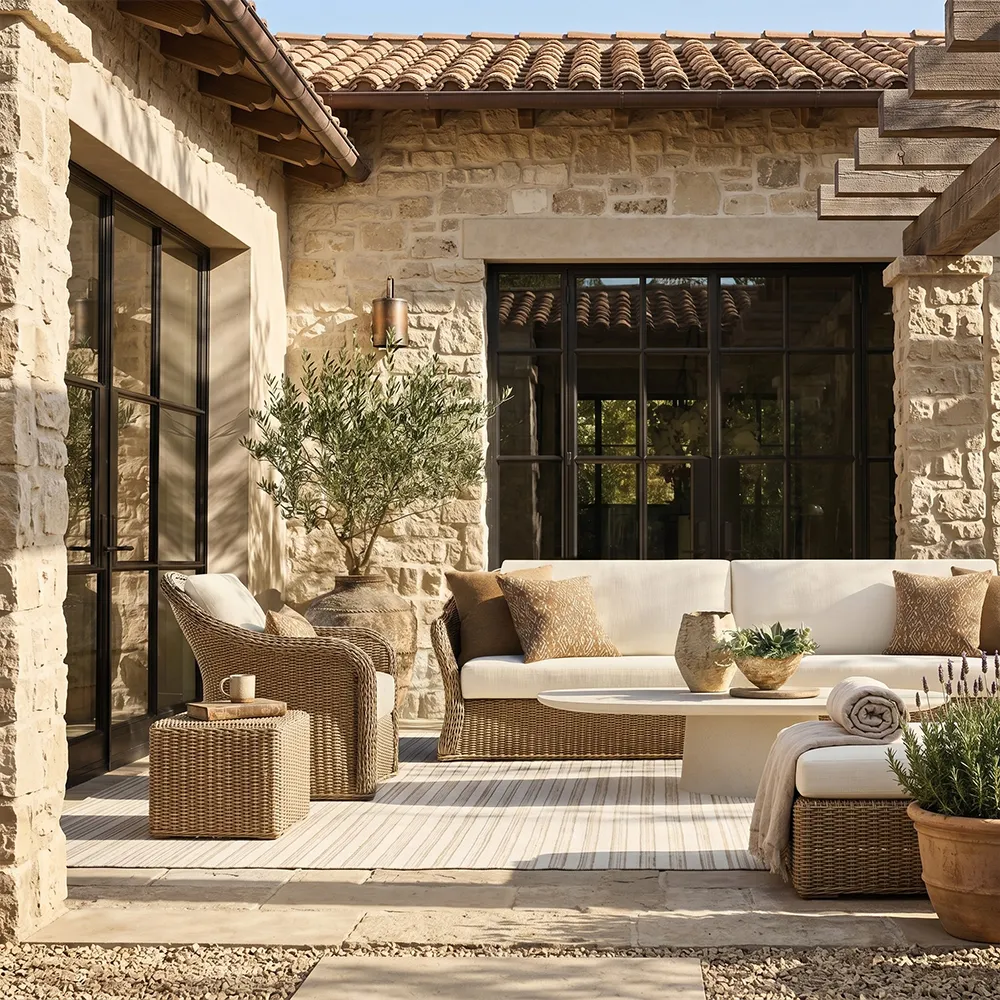
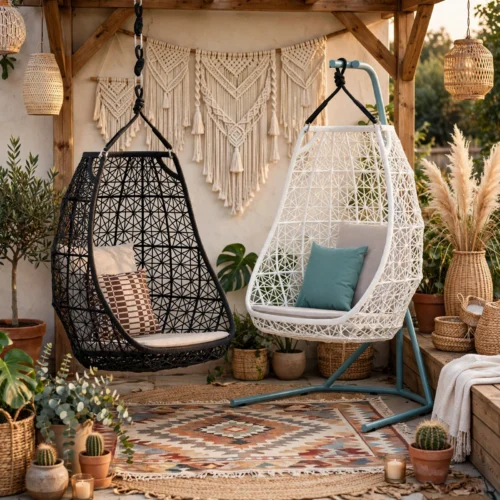
Woven pieces — including popular outdoor hanging chairs — collect dust and grime inside the weave, which makes them look old before their time.
- Brush or vacuum the weave first, then wash with soapy water and rinse well so no residue stays trapped.
- Let woven pieces dry completely before covering or stacking; trapped moisture invites mildew.
- Check tension periodically: sagging weave is usually an early sign the piece needs re-tensioning or replacement, not a structural failure.
Cushions and Fabric: Clean Without Damage
Cushions take the worst abuse — sunscreen, drinks, body oils — and they’re the first thing guests touch.
- Choose removable, washable covers wherever possible; that’s a specification worth asking your supplier about before ordering.
- Spot-clean spills immediately with mild soap; never use bleach on outdoor fabrics unless the care label allows it.
- Air-dry cushions fully after rain or washing — foam cores that stay damp develop odor and mold.
- In low season, store cushions indoors in a dry, ventilated space rather than leaving them on the frames.
Hardware, Umbrellas and Moving Parts
Small parts cause the most guest complaints: a wobbly table, a stuck umbrella crank, a lounger that won’t recline.
- Lubricate hinges, cranks and reclining mechanisms with silicone spray twice a season.
- Check umbrella ribs and canopy fabric for tears before peak season; a small tear becomes a ripped canopy in one storm.
- Keep a box of spare bolts, caps and glides on site — matching parts are far easier to source during the order than a year later.
Repair or Replace? A Buyer’s Decision Framework
Not every worn piece needs replacing. Use this simple rule of thumb:
- Repair: cosmetic issues (faded fabric, chipped coating, loose bolts, sagging weave), or one-off broken parts your supplier can provide.
- Replace: structural cracks in frames, widespread corrosion, foam that has permanently collapsed, or designs that no longer match your property’s look.
When you replace, order a few extra units beyond the immediate need — they become your spare-parts pool for the next few seasons.
Ask Your Supplier About Maintenance Before You Buy
The easiest maintenance program starts at the purchasing stage. When sourcing 户外餐桌椅套装 or any commercial furniture, ask your manufacturer:
- Which cleaning products are safe for these finishes?
- Can you supply touch-up paint, spare bolts and replacement cushion covers?
- What is the expected service life under commercial daily use — and what maintenance does that assume?
- Do you offer replacement parts after the initial order?
A factory that answers these clearly is a factory that builds for the long term — not just for the container loading date.
Get a Maintenance-Friendly Quote for Your Property
Well-chosen, well-maintained outdoor furniture pays for itself in guest satisfaction and longer replacement cycles. If you’re planning a new terrace, pool deck or café fit-out — or refreshing an existing one — talk to a manufacturer that understands commercial use.
WhatsApp +86 185 7650 6959 — send us your project type, quantities and timeline, and we’ll recommend low-maintenance designs built for hotels, resorts and cafés.