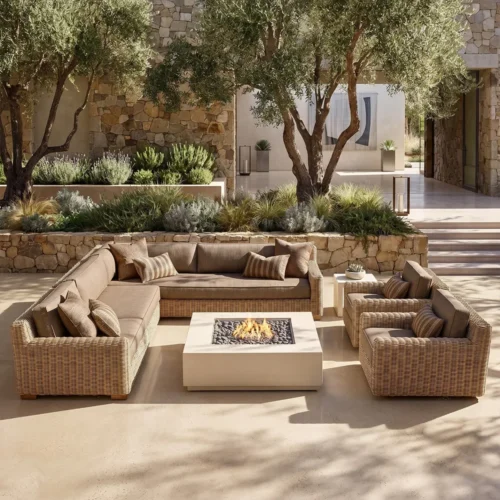
An outdoor lounge chair is the piece of furniture guests reach for first. It is where they read by the pool, wait for dinner on the terrace, or sit with a coffee on a hotel balcony. For hotels, resorts, cafés and distributors, it is also one of the most-ordered outdoor items — small enough to ship in volume, visible enough to shape how guests judge a property. This guide covers how to choose lounge chairs that stay comfortable, look good after a season outdoors, and fit a commercial order.
1. What Counts as an Outdoor Lounge Chair
A lounge chair sits between an armchair and a sun lounger. It has a reclined backrest, a seat low enough to relax in, and often armrests — but unlike a sun lounger, it is not built for lying flat. That makes it the most flexible seat outdoors: it works beside a pool, on a restaurant terrace, in a garden, or on a balcony where a full lounger would not fit.
Before ordering, decide which of these you need:
- Poolside lounge chairs — upright enough to sit and talk, with quick-dry cushions.
- Garden and terrace lounge chairs — deeper seats and softer cushions for long, relaxed sitting.
- Balcony lounge chairs — compact frames that fit small spaces without blocking walkways.
If your project needs full-length reclining by the water, look at sun loungers instead — our sun lounge collection covers poolside recliners, while lounge chairs handle the sitting areas around them.
2. Frame Materials That Last Outdoors
The frame decides how long a lounge chair survives rain, sun and daily commercial use. Three materials dominate the market:
Aluminium. Light, rust-proof and easy to move, aluminium is the default for hotel and resort orders. A powder-coated aluminium frame keeps its finish through seasons outdoors and stacks well for storage. It is also the easiest frame to pair with rope or textilene weaving. For a full comparison of the two most popular frame materials, see our guide on teak vs aluminium outdoor furniture.
Solid teak. Heavy, stable and naturally weather-resistant, teak suits high-end villas and boutique hotels that want a warm, natural look. It costs more and weighs more, so it is best where chairs stay in place rather than being moved daily.
Steel. Strong and affordable, but only when the coating is done well. Uncoated or thinly coated steel rusts quickly outdoors, so check the finish before ordering in volume.
For most commercial buyers, aluminium is the safe starting point: it balances weight, weather resistance and cost, and it works with almost every weave and cushion style.
3. Rope, Wicker and Textilene: Choosing the Weave
The weave is what guests touch and see. Three options cover nearly every lounge chair on the market:
- Rope weave — hand-woven synthetic rope over an aluminium frame. It dries fast, stays cool in the sun, and gives a crafted, premium look that photographs well. See our rope outdoor furniture buyer’s guide for rope types and quality checks.
- Wicker and rattan-look weave — a classic outdoor look, best in covered terraces and sheltered gardens where it is not soaked daily.
- Textilene sling — a taut fabric seat that drains water instantly and needs almost no maintenance, ideal for poolside chairs that get wet every day.
Ask your supplier which weave they use, and request a sample swatch before a large order. Colour should run through the material, not sit on the surface — surface colour fades and peels, while through-coloured rope and fabric keep their tone.
4. Cushions: Comfort Without the Upkeep
A lounge chair without a good cushion is a chair guests avoid. But cushions are also the part that causes the most maintenance complaints. Get these three things right:
- Quick-dry foam. Standard foam holds water for days. Quick-dry foam drains and dries within hours, which matters for any chair used near a pool.
- Removable, washable covers. Covers should unzip and wash easily, so housekeeping can refresh a chair between guests instead of replacing it.
- UV-stable fabric. Outdoor fabric should resist fading in strong sun. Ask whether the fabric is solution-dyed — it holds colour far longer than printed fabric.
For a hotel, order a small set of spare cushion covers with your first order. They cost little, and they keep chairs looking new when one cover is in the wash.
5. Sizing and Layout: How Many Chairs Fit Your Space
Lounge chairs look compact, but they need more room than buyers expect. Plan on roughly 70–90 cm of width per chair, plus at least 60 cm of space in front for legs and a small side table. A pair of chairs with a shared side table needs about 2 metres of terrace width.
Before you order, measure and sketch the space:
- Mark each chair position on the floor plan, including the side table.
- Leave a clear walkway of at least 90 cm between seating groups.
- Check door and lift widths if chairs must travel through the building — some wide lounge chairs do not fit standard doors.
For covered terraces, lounge chairs pair well with outdoor sofas to build a full seating zone — see our outdoor sofa collection for matching pieces in the same frame and weave.
6. Weatherproof Checks Before You Order
A lounge chair that looks good in a showroom can fail in its first rainy season. Run these checks on a sample before committing to a bulk order:
- Frame joints. Welds should be smooth and fully coated, with no bare metal at the joints.
- Feet and glides. Adjustable feet protect the frame on uneven stone or decking and stop chairs wobbling.
- Drainage. Seats and cushions should shed water, not pool it. A chair that holds water grows mould.
- Stackability. If you need to store chairs off-season, check how many stack safely and how much floor space a stack needs.
A sample order of one or two chairs is the cheapest insurance in furniture buying. Test them outdoors for a few weeks, then place the bulk order with confidence.
7. Where Lounge Chairs Work Best
- Hotel pool terraces — upright lounge chairs for conversation areas, with sun loungers reserved for the water’s edge.
- Resort gardens — teak or rope lounge chairs under shade trees, grouped in pairs with side tables.
- Café and restaurant patios — compact, stackable chairs that staff can rearrange between lunch and dinner service.
- Villa terraces and balconies — deeper, softer lounge chairs where guests sit for hours, matched to the villa’s outdoor sofa set.
One chair style rarely fits every zone. Many buyers order one main style for the largest area and a smaller quantity of a second style for balconies or quiet corners.
8. Ordering Wholesale: What to Ask Your Supplier
Buying lounge chairs wholesale is different from buying one chair for your home. Before you confirm an order, ask your supplier:
- What is the minimum order quantity, and does it change with custom colours or fabrics?
- Can the frame colour, weave colour and cushion fabric be customised to match your property?
- What is the production lead time, and how are the chairs packed for container shipping?
- What after-sales support is available if a frame or weave fails in the first season?
Our guide to wholesale outdoor furniture: MOQ, lead time and custom orders explains each of these points in detail, so you can compare suppliers on equal terms.
9. Get a Wholesale Quote
A good outdoor lounge chair earns its place the first week it is in use — guests sit in it, photograph it, and remember the property by it. Choose the frame for your climate, the weave for your look, and cushions your housekeeping team can maintain, and order a sample before you commit to volume.
Planning a hotel, resort, café or villa project? Message us on WhatsApp at +86 185 7650 6959 for a wholesale quote. Tell us your quantity, preferred frame and weave, and delivery destination, and we will send you matching lounge chair options with pricing.