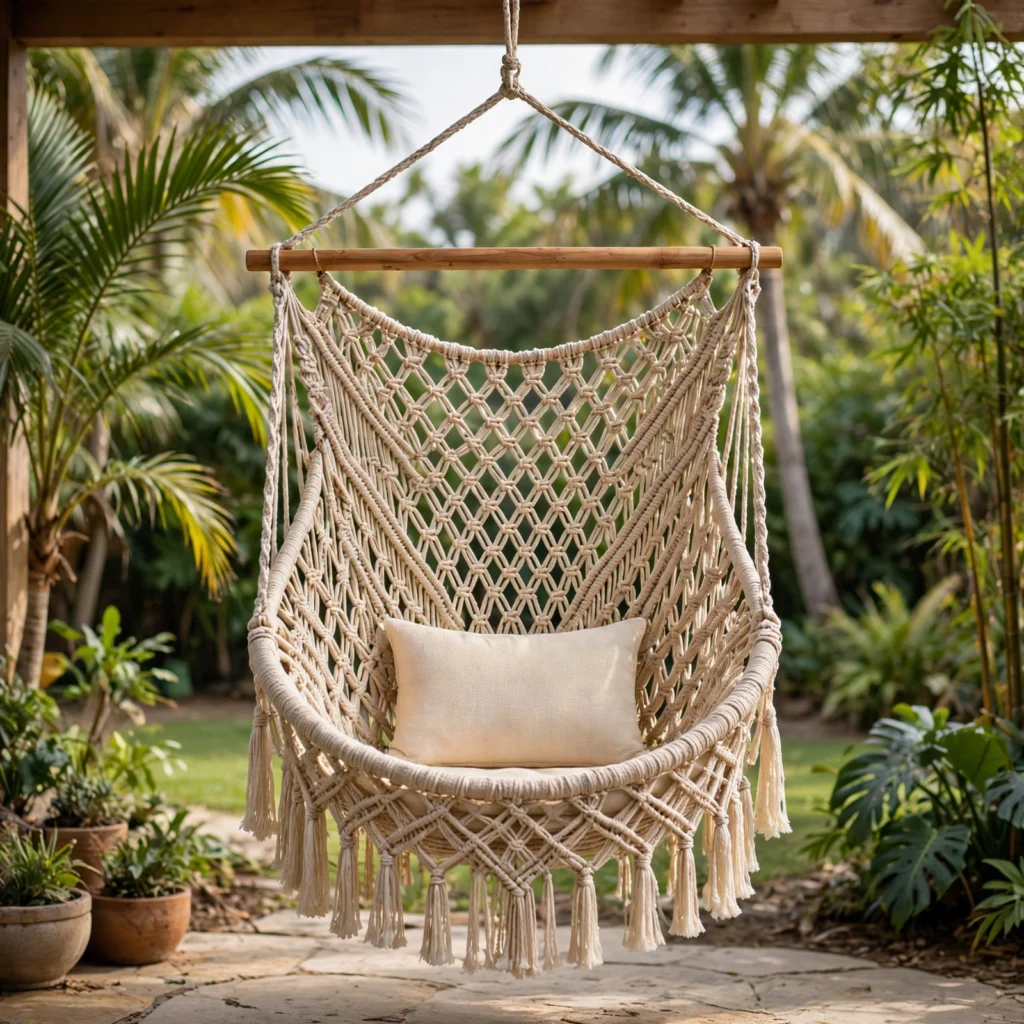
Short answer: For hotels, resorts and commercial projects, rope outdoor furniture is the safer long-term choice. Rope weave handles sun, rain and daily use with very little upkeep, while natural rattan is best kept indoors and synthetic rattan (PE rattan) sits in the middle — tougher than natural rattan, but heavier-looking and harder to repair than rope. For a natural woven look that survives poolside and terrace use season after season, choose rope.
Rope vs Rattan at a Glance
Both materials give outdoor furniture the same warm, woven look, but they are built very differently.
- Rope: synthetic rope (usually PE or olefin) woven over a metal frame. Light, weatherproof, easy to clean, simple to repair.
- Natural rattan: a climbing palm stem, woven by hand. Beautiful and light, but it absorbs moisture, cracks in strong sun and belongs indoors.
- Synthetic rattan (PE rattan / resin wicker): plastic strands woven to look like rattan. Weatherproof and widely used outdoors, but thicker and heavier-looking than rope.
For a commercial buyer, the real question is which one still looks good after two summers of guests, rain and cleaning crews.
What Is Rope Outdoor Furniture?
Rope outdoor furniture is made by weaving synthetic rope around an aluminium frame. The rope forms the seat, backrest and often the armrests, while the frame underneath carries the weight. The weave drains after rain, dries quickly and needs no oiling or sealing.
At Vine Space we specialise in rope-woven furniture — sofas, armchairs, dining chairs and hanging chairs built on powder-coated aluminium frames in our own factory in Foshan, China. Our rope weave carries a 3-year warranty, and every piece is made to order in the buyer’s sizes, colours and layouts. Read our full rope outdoor furniture buyer’s guide for rope types, frame checks and a pre-order checklist.
What Is Rattan Outdoor Furniture?
Rattan is often used as a catch-all word for two very different materials.
Natural Rattan
Natural rattan comes from the rattan palm. It is light, flexible and easy to weave into elegant shapes, which is why it has been used for indoor chairs for generations. Outdoors, however, it is a poor fit: it absorbs water, swells and rots in rain, fades and becomes brittle in strong sun, and needs regular sealing to survive even a covered terrace.
Synthetic Rattan (PE Rattan / Resin Wicker)
Synthetic rattan is made from polyethylene (PE) strands woven over a metal frame — the same basic construction idea as rope furniture, with a different weaving material. It resists rain and UV far better than natural rattan and is a legitimate outdoor material. Its main drawbacks are the look and the repair: the strands are usually thicker and flatter than rope, giving a heavier appearance, and a broken strand is harder to replace neatly than a rope section.
Durability and Weather Resistance
Weather is the deciding factor for any commercial outdoor purchase, and here the gap is clear.
Rope weave is built for the outdoors: the synthetic rope does not absorb water, holds its colour in strong sun and stays flexible in heat and cold. A powder-coated aluminium frame will not rust, and the open weave lets rain drain straight through instead of pooling on the seat.
Synthetic rattan performs well in the same conditions — rain and sun do not damage PE strands — but dark colours can get very hot to the touch in direct sun, and cheaper strands can turn brittle after years of UV exposure. Natural rattan should not be compared outdoors at all; it will not survive a single wet season without serious damage.
Comfort and Look
Rope furniture feels softer to sit on than most synthetic rattan. The round strands have a slight give, and the open weave lets air move through the seat and backrest — guests notice the difference on a hot afternoon. Rope also comes in a wide range of colours and thicknesses, from fine weaves for boutique hotels to chunky rope for heavy-use resort seating.
Synthetic rattan gives a more solid, classic wicker look that suits traditional or heritage-style properties. The trade-off is feel: the flat strands are firmer and less breathable than rope, and the pieces tend to look heavier.
Natural rattan wins on elegance alone, but that elegance belongs in indoor lounges, bedrooms and covered verandas — not open terraces.
Whichever look you choose, compare the frame underneath as well. Aluminium frames are light, rust-resistant and easy to move — see our teak vs aluminium guide for how frame materials affect lifespan and maintenance.
Maintenance and Cleaning
Across dozens of rooms or a whole resort terrace, maintenance costs add up fast — and this is where rope usually wins.
- Rope: brush off dust weekly, wash with mild soapy water and a soft brush every few weeks, rinse and air-dry. No oiling, no sealing, no special products. A loose rope end can be repaired or re-woven locally.
- Synthetic rattan: similar routine — soap, water and a brush — but dust and dirt collect in the tighter weave, so cleaning takes longer. A broken strand is difficult to replace invisibly.
- Natural rattan: needs regular dusting, gentle cleaning, drying out of direct sun, and periodic sealing or oiling. Even with care, outdoor use shortens its life sharply.
For a property with a small housekeeping team, rope’s simple routine is a real operational saving — see our outdoor sofa collection for rope-woven sets built for daily commercial use.
Cost and Value for Commercial Projects
On purchase price alone, synthetic rattan and rope furniture are usually in a similar range, while natural rattan can be cheaper upfront but far more expensive over time because of replacement. The honest comparison is total cost over three to five years: purchase price plus cleaning, repairs and replacement.
On that basis, rope is the strongest value for most hotel and resort projects: it costs no more than synthetic rattan to buy, less to maintain, and a damaged section can be re-woven, while a damaged synthetic rattan panel often means replacing the whole piece. Natural rattan is the most expensive option outdoors, because it will need replacing long before the other two.
When you order, confirm the practical terms in writing: minimum order quantity, sample lead time, bulk production time and warranty. At Vine Space the terms are simple — MOQ is 1 set across all categories, samples take 10 days, bulk production takes 30 days from order confirmation, and the warranty covers the frame for 3 years, fabric for 5 years and rope weave for 3 years.
Which Should You Choose?
Match the material to the setting, not to the catalogue photo.
- Choose rope for hotel terraces, resort poolsides, café patios and any uncovered area used every day — the best balance of a natural look, weather resistance, comfort and low maintenance.
- Choose synthetic rattan for a traditional or heritage look outdoors, when you specifically want the classic wicker appearance and accept heavier pieces and slower cleaning.
- Choose natural rattan only for indoor or fully covered spaces — lobbies, bedrooms, covered verandas — where it will never face rain or strong direct sun.
Rope also works beyond seating: a woven hanging chair makes a natural focal point on a terrace or in a lobby, and rope dining chairs pair neatly with stone or teak tabletops.
Buyer FAQ
Is rope outdoor furniture better than rattan?
For outdoor commercial use, yes. Rope weave resists rain, sun and chlorine, needs only soap-and-water cleaning, and is easier to repair than either natural or synthetic rattan.
Can natural rattan furniture be used outdoors?
Only under full cover and never in rain. Natural rattan absorbs moisture, rots and becomes brittle in sun. For open terraces and poolsides, choose rope or synthetic rattan instead.
What is synthetic rattan made of?
Most synthetic rattan is polyethylene (PE) plastic strands woven over a metal frame to imitate natural rattan. It is weatherproof, unlike natural rattan, but heavier-looking and harder to repair than rope.
How long does rope outdoor furniture last?
With basic cleaning, rope furniture on an aluminium frame lasts for many seasons in commercial use. At Vine Space the rope weave and the frame are each covered by a 3-year warranty.
Does rope furniture fade in the sun?
Quality synthetic rope is UV-stabilised and holds its colour well in strong sun. Ask your supplier whether the rope is UV-stabilised and request a sample swatch before ordering.
What is the minimum order for wholesale rope furniture?
At Vine Space the MOQ is 1 set across all categories. Samples take 10 days and bulk production takes 30 days from order confirmation, so plan your order around your opening date.
Get a Wholesale Quote
Planning a hotel, resort or café project and deciding between rope and rattan? We manufacture rope outdoor furniture in our own factory in Foshan, China, and supply hotels, resorts and distributors worldwide. Tell us your sizes, quantities and colours, and we will prepare a quote.
WhatsApp us at +86 185 7650 6959 for a wholesale quote.